Vivarium management software
Records inspectors trust. A floor that never stops.
Every health check, dose and census count names who did it and when, and a correction keeps the original. When something is off, Vivocare flags it and lets the round go on. No lockouts, no halted studies, no binders before the site visit.
- The Guide for the Care and Use of Laboratory Animals
- PHS Policy
- USDA Animal Welfare Regulations (9 CFR)
Most vivaria still run on paper cage cards, binders and spreadsheets.
Nobody is careless. Paper simply loses things between the rack, the vet's office and the billing desk.
TodayA technician notes a hunched mouse on paper, the vet hears about it at rounds, and a skipped analgesic dose never makes it into a record.
With VivocareThe technician reports the sick animal from the rack, the vets see the clinical case right away, and every scheduled treatment shows as given or overdue, with who gave it.
TodayThe monthly census is retyped from cage cards, and it never quite matches what is in the rooms.
With VivocareThe cage census is taken on a phone, even in barrier rooms without Wi-Fi, and the approved count is the record.
TodayNobody notices a protocol is over its approved animal numbers until the semiannual review.
With VivocareAnimal use is counted against each protocol's approved numbers, and overages are flagged for the IACUC office with who caused them.
TodayBefore a USDA inspection or AAALAC site visit, staff pull binders to rebuild who gave which treatment and who signed which health check.
With VivocareEvery entry already names who did it and when. Corrections keep the original, so the history is simply there.
Count the cage. Track the individual only when it matters.
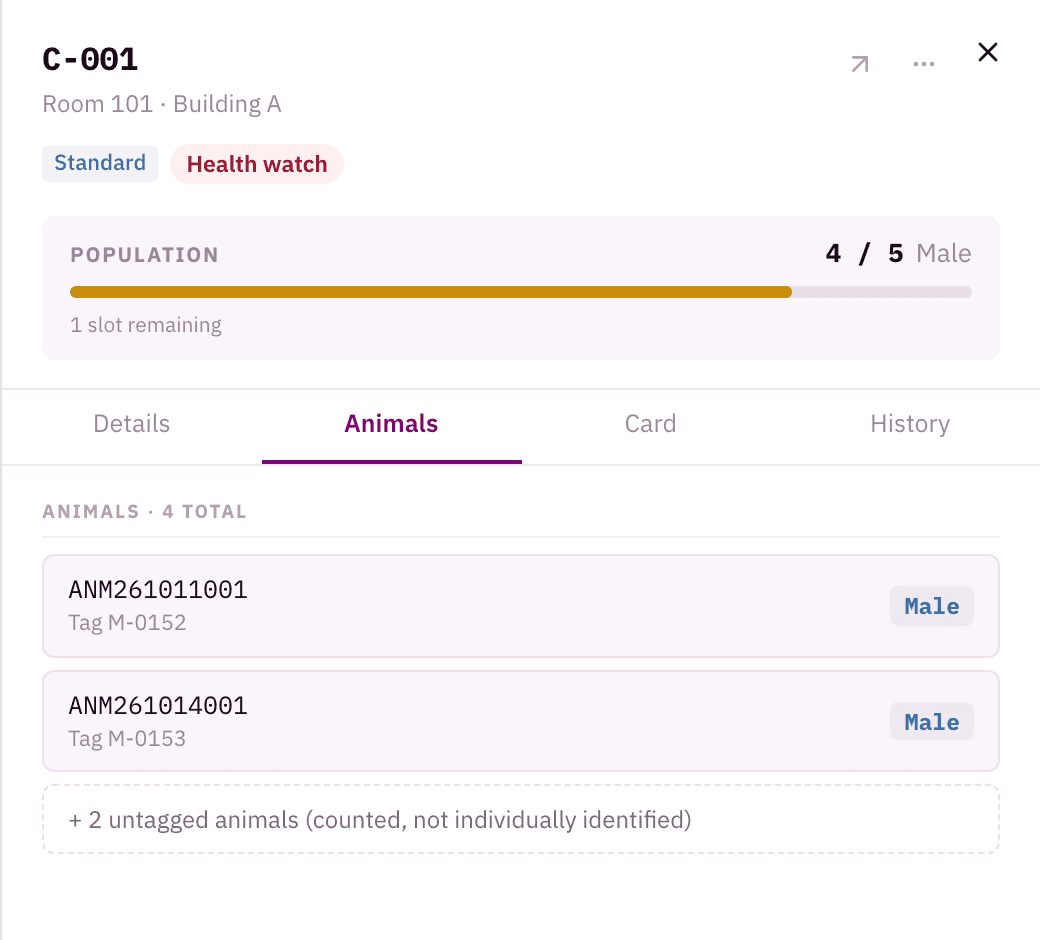
Most research mice and rats are a headcount in a cage, so Vivocare records them that way. When one animal needs attention, you promote it to its own record without changing the count.
An animal gets its own record when:
- It is a USDA-covered species that needs individual identification, such as rabbits, dogs or primates
- It needs individual clinical care
- Your study needs per-animal data
Mice and rats bred for research are outside the USDA Animal Welfare Act, and the Guide accepts cage-level records for them. Your IACUC and SOPs decide where individual records are required.
Rules that flag problems without blocking care
Every rule leaves a record an auditor can follow. They're enforced in the database, so they hold whether an action comes from the app or a direct request.
Vivocare flags what needs a second look and never blocks animal care. Your SOPs decide how strict each facility is.
A day in the vivarium
One day on the floor, from morning health checks to the month-end close. The record builds itself as the work happens.
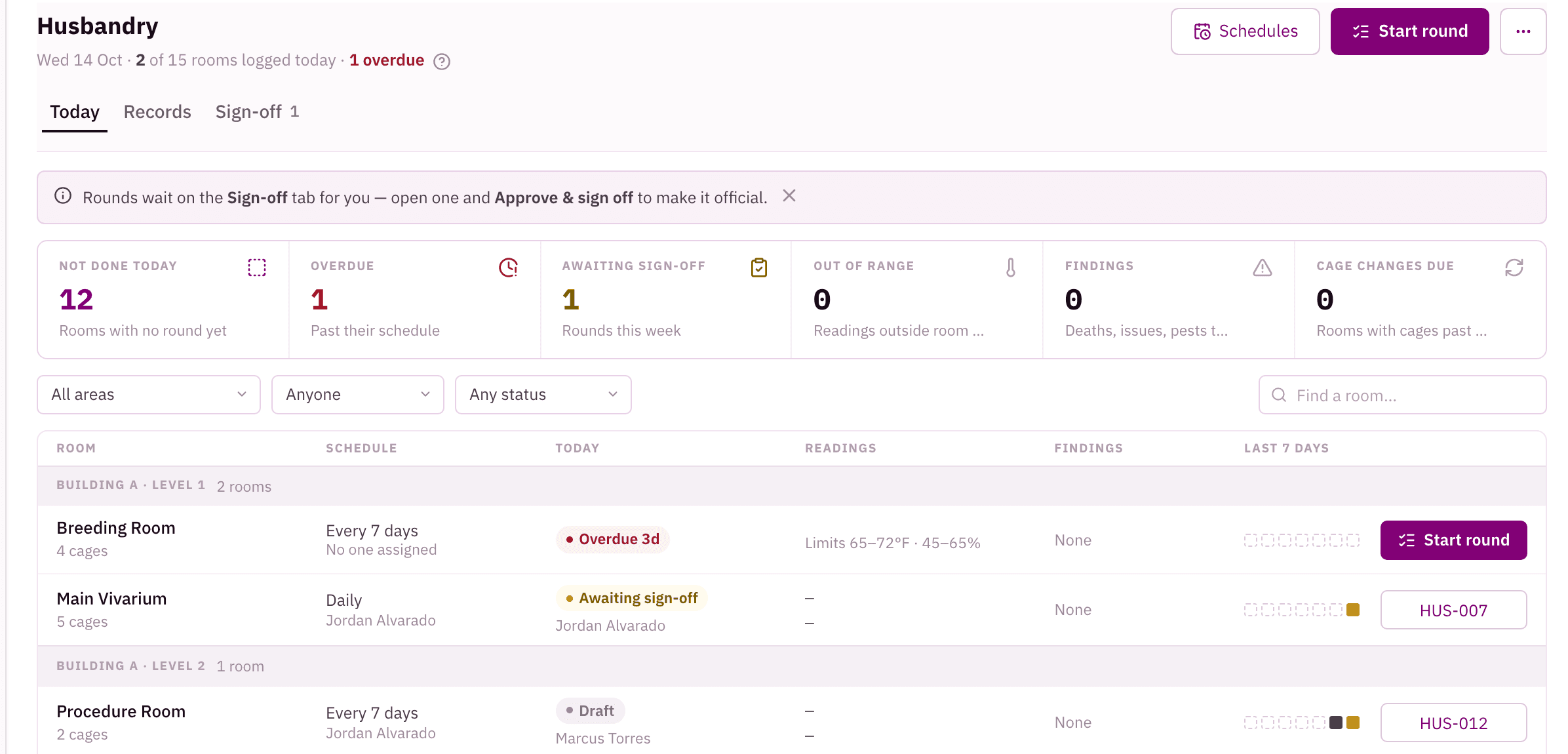
A technician checks every cage in the room. Cages without findings are simply counted; only exception cages get an entry. The record waits in Pending review until a veterinarian or PI signs it off or sends it back.
Technician
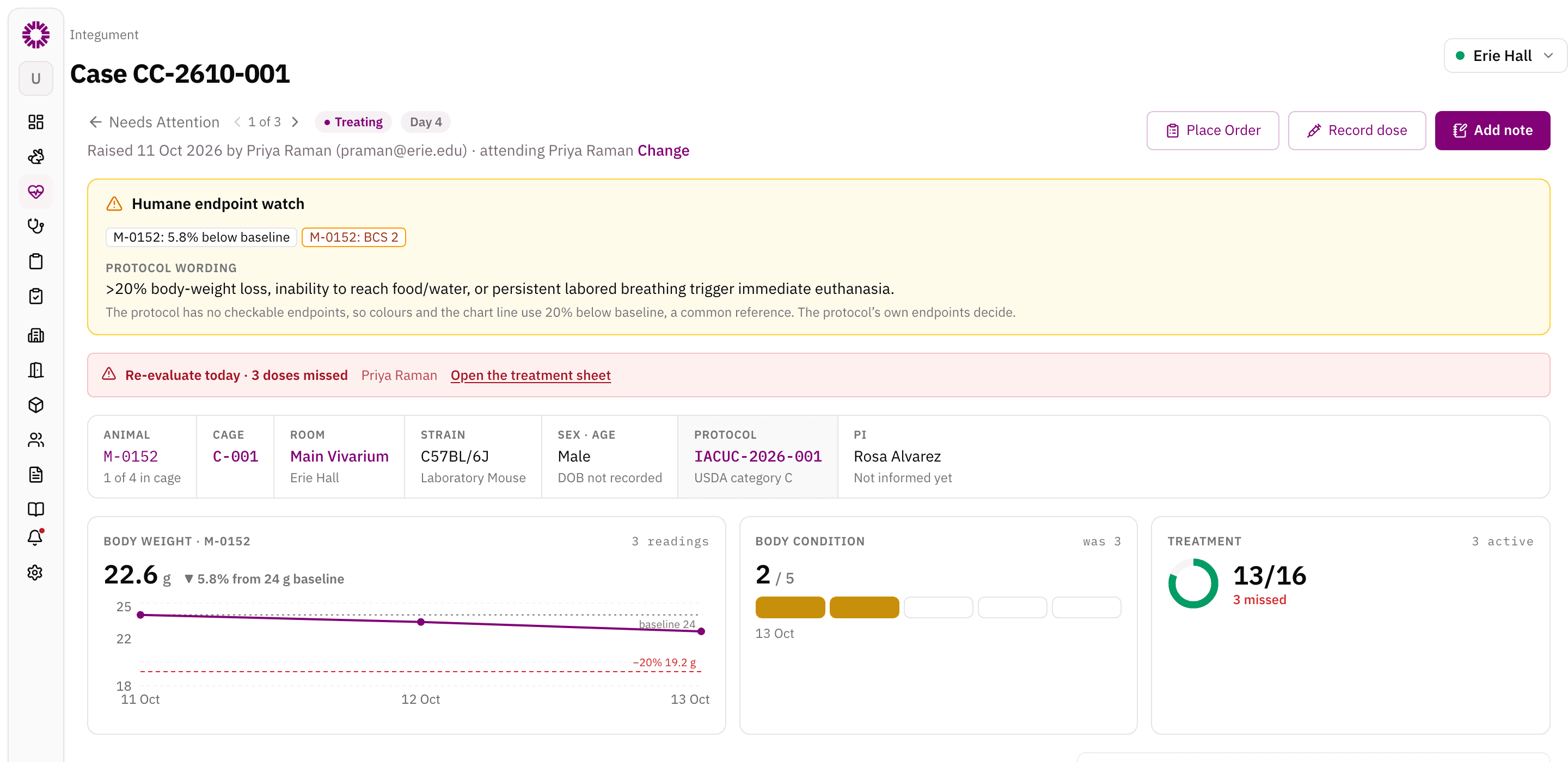
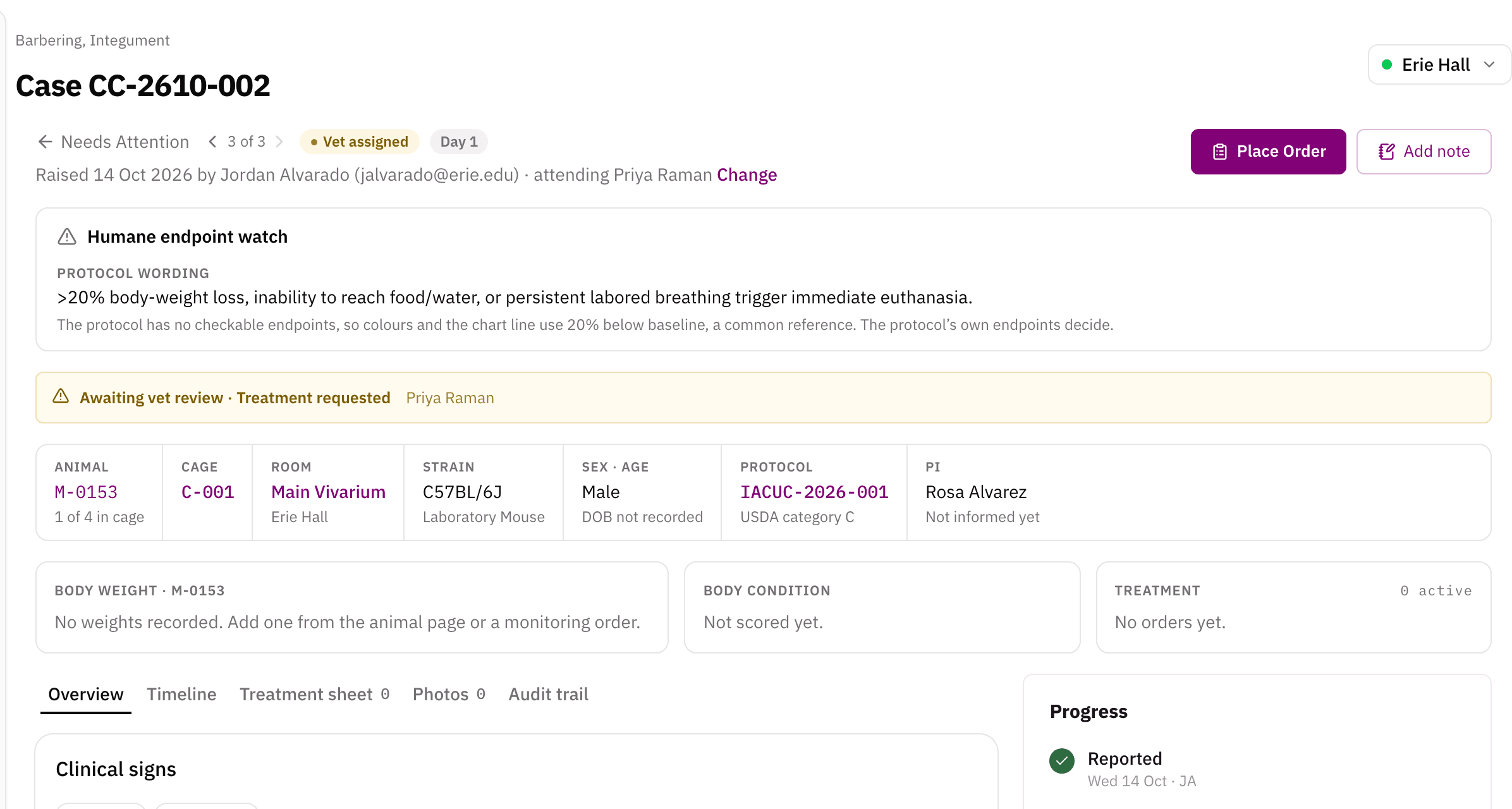
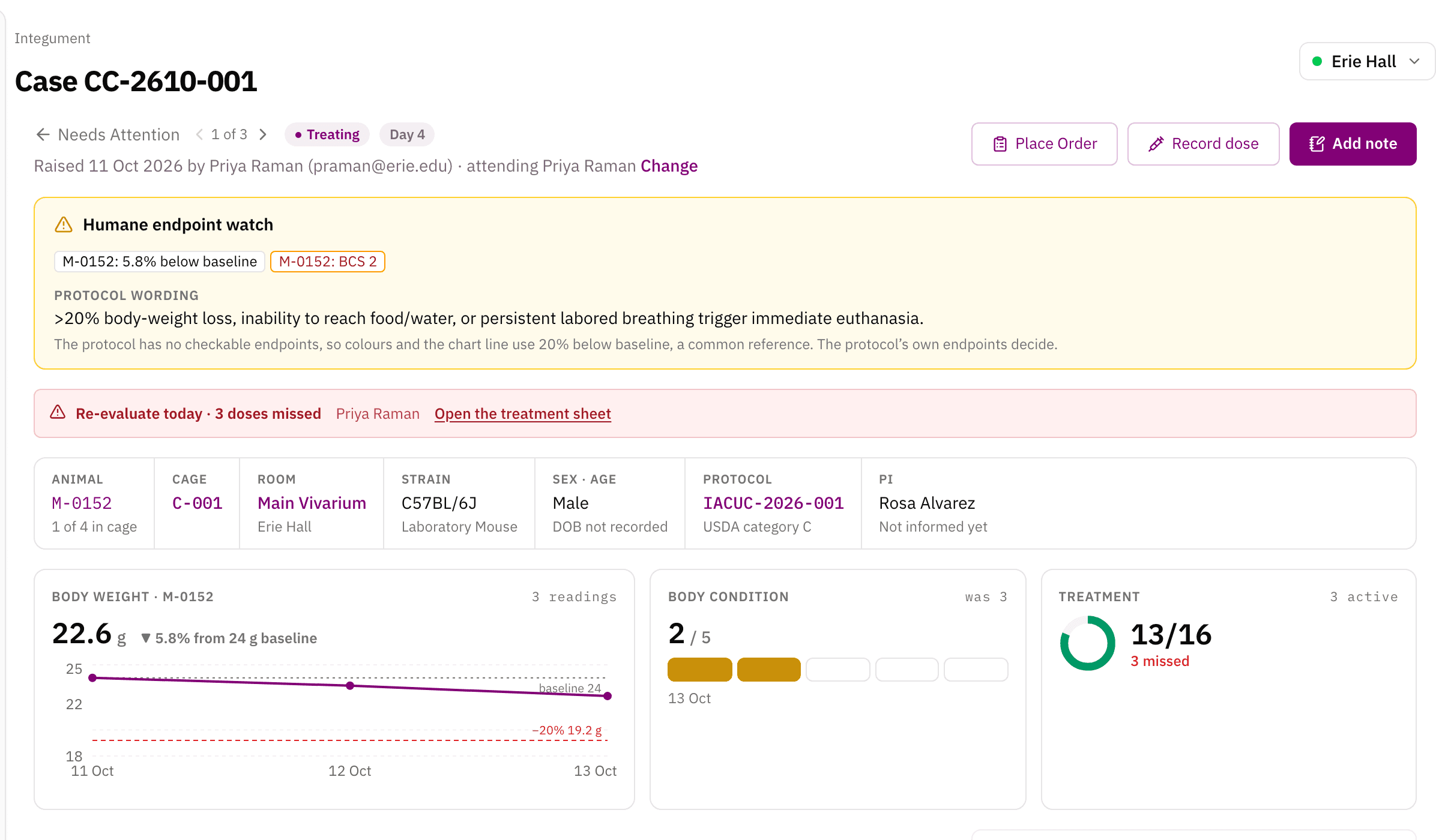
A technician spots a mouse with barbering and reports it from the rack with a body-map mark, a photo and an urgency. Vivocare opens a numbered clinical case for the veterinary staff with the animal, cage, protocol and PI already filled in.
Technician
The veterinarian examines the animal, sets a treatment plan and writes the orders. Body weight and body condition score are tracked for humane endpoint monitoring, and the orders land on the treatment sheet.
Veterinarian
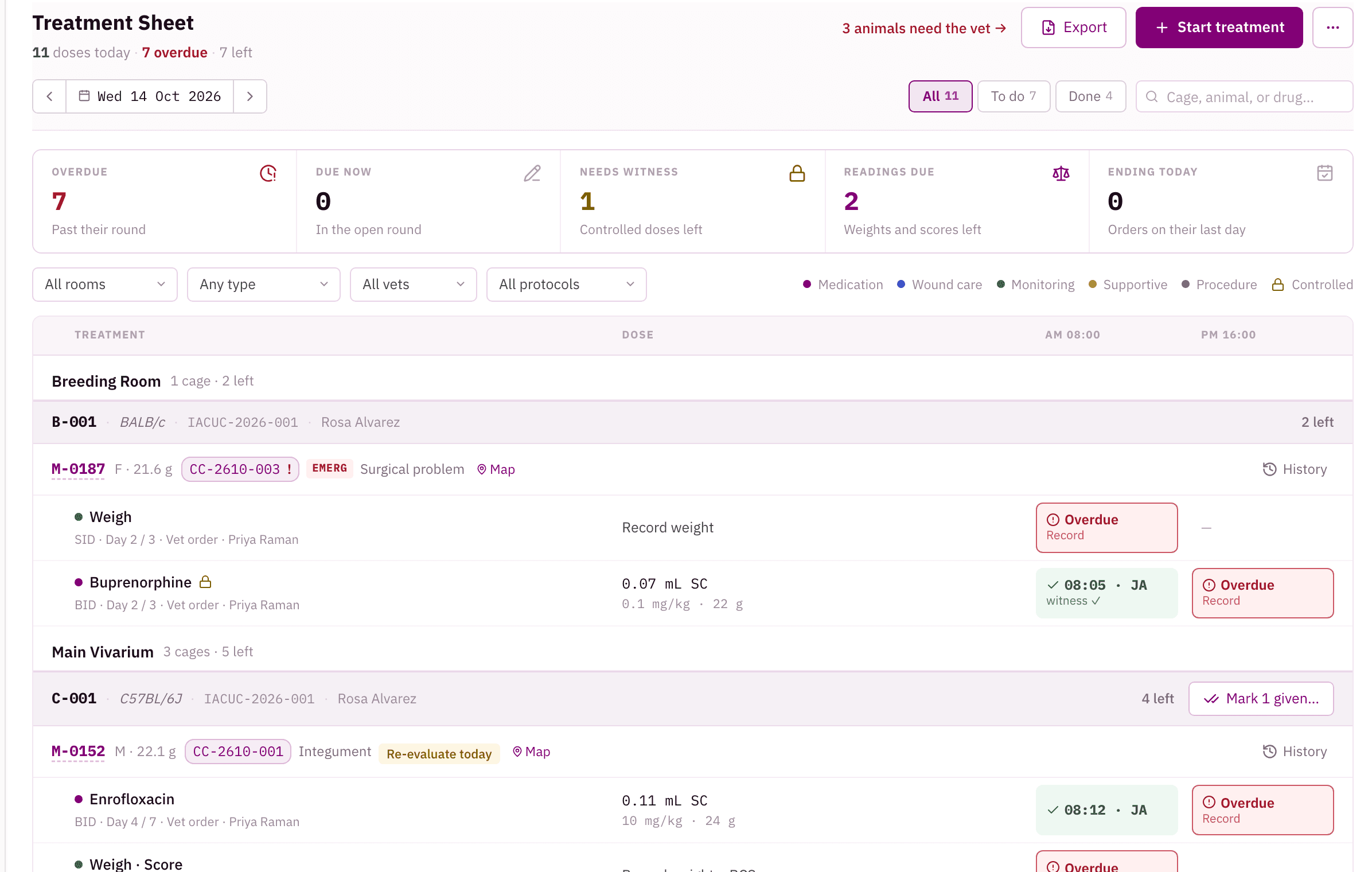
Each treatment records who administered it and who documented it. A controlled substance needs a lot number and a witness other than the person administering it. Routine cage-level treatments can be marked given in one step.
Technician
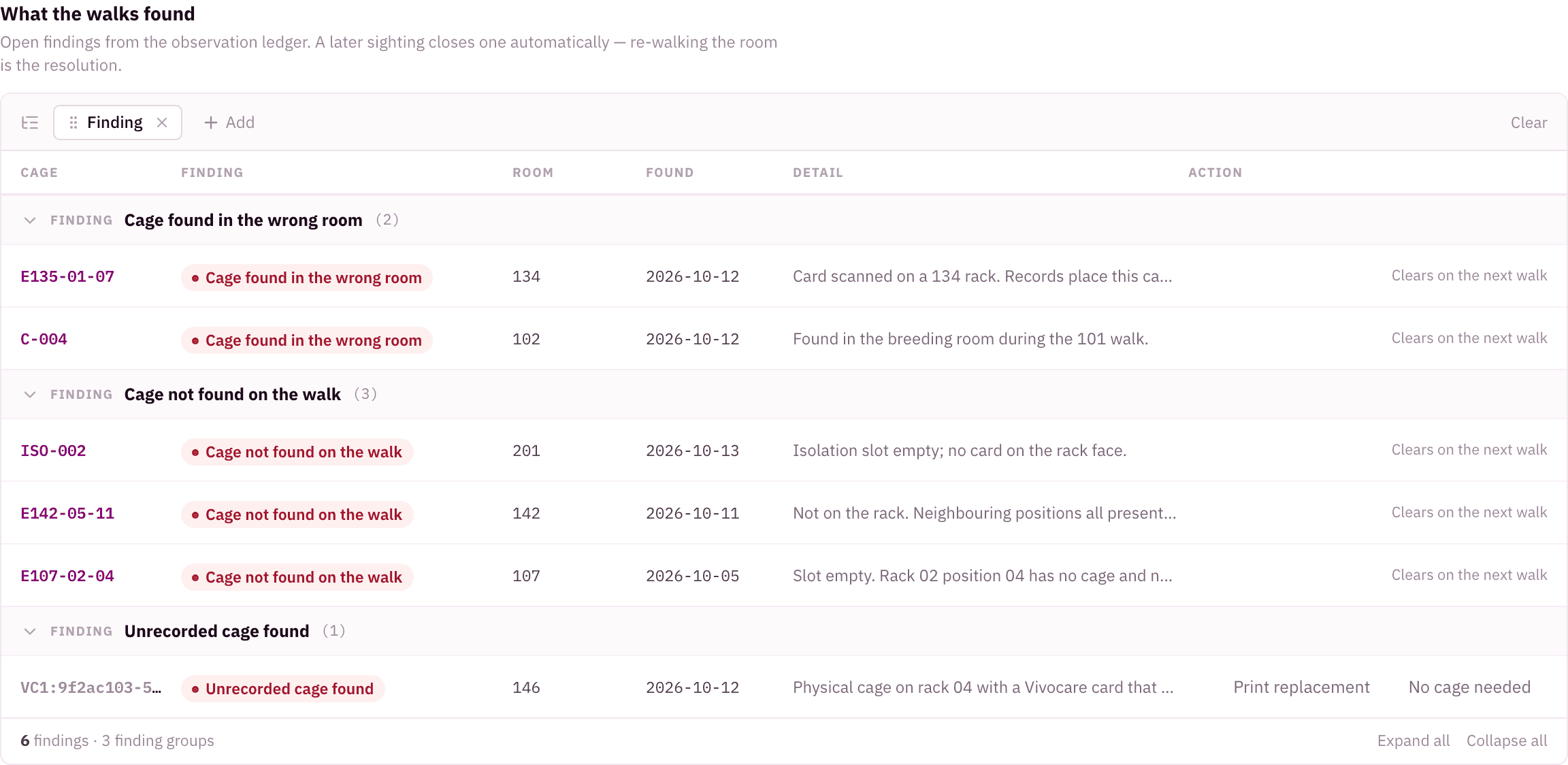
Staff scan cage cards room by room on a phone, even without Wi-Fi. Missing, unexpected and misplaced cages are flagged as discrepancies, and the room's next census resolves them. A second person reconciles the count. If nobody else is available, the submitter approves with a reason and the count is flagged self-approved.
Technician and supervisor
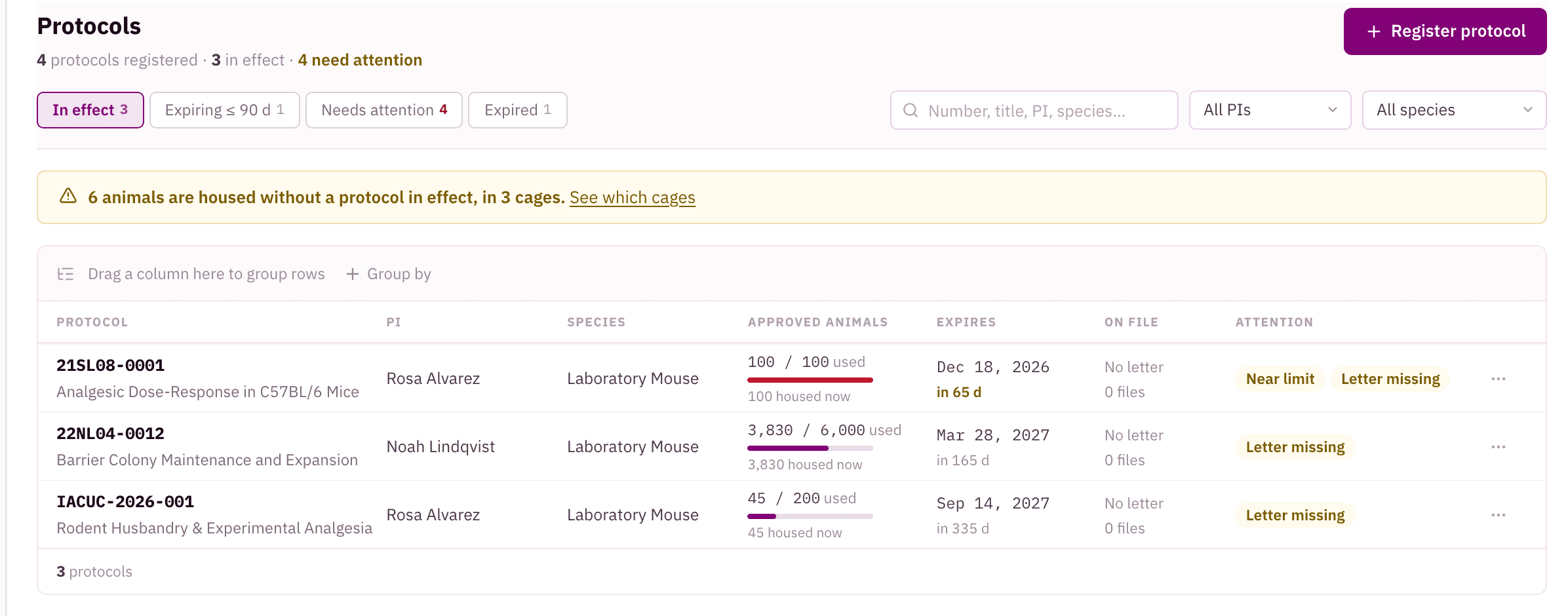
Check each protocol's animal use against its approved numbers, and give the IACUC or a USDA inspector the full history of any animal or cage.
Facility manager
Built for teams where everyone wears three hats
Most vivaria are short-staffed. Vivocare doesn't assume one person per role, so a PI who is also a DVM can carry the veterinarian credential.
The floor: daily health checks, treatments, cage census and reporting clinical cases.
- Complete daily health checks, documenting only exception cages
- Open a clinical case from the rack with a photo and body map
- Record treatments, or mark a cage's routine treatments given
- Take the cage census on a phone
Clinical care, the formulary, and husbandry sign-off.
- Triage cases awaiting a vet, urgent ones first
- Set plans and write orders that land on the Treatment Sheet
- Review standing-order starts and approve drugs for them
- Close or reopen a case, or authorize euthanasia
Their studies: protocols, animal use and husbandry sign-off.
- Register approved protocols and their amendments
- See use against each protocol's approved number
- Answer IACUC flags with notes
- Sign off daily health checks
The building: rooms, cages, people and the monthly close.
- Map facilities, rooms, racks and cages
- Invite staff and assign them to facilities
- Approve census counts and export them
- Set sign-off and independence rules on the facilities they manage
An owner or administrator can grant the veterinarian credential on any role.
See Vivocare by roleEverything the floor runs on, in one place
Each module works on its own, and they share one record of rooms, cages, animals and people.
Husbandry and daily health checks
One record per room, with entries only for exception cages. Review and sign-off, send-back and optional room schedules.
Clinical cases and treatment records
Sick animal reporting, veterinary treatment plans and orders, daily treatment records, standing orders and controlled substance logs.
Cage census and cage cards
Mobile cage census that works offline, QR cage cards, reconciliation, animal acquisitions and census exports.
Protocols
Register your IACUC-approved protocols with species, documents and amendments, and track animal use against approved numbers. Works alongside your IACUC system.
Facilities, rooms and cages
Facility, room, rack and cage, as they are built. Every cage keeps a ledger of who moved which animals and why.
Animals
Acquisitions, housing, transfers and dispositions, with a timeline for every animal that needs its own record.
Reference library
Species, strains, procedures and your formulary, with controlled substances and standing-order approval.
Members and access
Six roles, a veterinarian credential for any role, and access scoped to the facilities each person works in.
Getting started takes days, not a migration project
- Step 1
We set up your organization
Your workspace is created on your institution's email domain, usually within a day.
- Step 2
Map your building
Add facilities, rooms and cages, register your approved protocols, and load your formulary.
- Step 3
Invite your staff
Staff join with their institutional email, take a role, and see only the facilities you assign.
Common questions
Read all questionsDo we have to track every mouse individually?
No. Mice and rats are tracked as a headcount per cage by default. An animal gets its own record only when it needs one, for example for clinical care, per-animal study data or a USDA-covered species.
Does Vivocare write or approve IACUC protocols?
No. Your IACUC approves protocols as it does today, and Vivocare works alongside the system your IACUC office already uses. Vivocare registers the approved protocol, with its species, documents and amendments, and tracks animal use against its approved numbers.
Does the cage census work in barrier rooms without Wi-Fi?
Yes. The mobile cage census works offline and syncs when the phone is back online.
How is Vivocare priced?
Per facility. Tell us about your facilities and we'll send a quote.
See Vivocare with your own rooms and protocols.
A 45-minute walkthrough. We map one of your rooms and run a day of health checks, clinical cases and treatments on it, so you can judge the fit on your own work.